CNC + Laser Aluminium Composition
CNC-routered and laser-cut aluminium for Ghana: decorative screens, perforated panels, mashrabiya, bespoke signage and architectural patterns — cut to tight tolerances and finished to a named specification. Aluminium Installers Ghana, since 1988.
CNC-routered and laser-cut aluminium turns a flat sheet into a decorative screen, perforated panel, mashrabiya or bespoke pattern — cut from a digital file to a tolerance no hand-cutting can hold. Aluminium Installers Ghana has fabricated and installed architectural aluminium across Ghana since 1988, and this discipline is where geometry, light and privacy are designed into the metal itself.
Why Cut Aluminium From a File
A perforated or fretted aluminium screen does several jobs at once: it shades glass and cuts solar heat gain, gives privacy without blocking air, breaks a blank elevation with pattern and shadow, and carries a logo or identity at architectural scale. Doing that well needs a clean, repeatable cut — the open area, the bar widths between holes, and the edge margins all decide whether the panel is strong enough to span and fix, and whether the pattern reads the way the architect drew it. Cutting from a vector file is what makes that precision, and that repeatability across dozens of matching panels, possible.
Choosing CNC Routing vs Laser Cutting
The right method follows the material and the pattern, not the other way round.
Cutting Methods & What They Suit
CNC Routing — Solid & Profiled Aluminium
A spinning tool bit driven on X, Y and Z axes. Suited to thicker solid aluminium, plate, deeper engraving and 3D-profiled or shaped pieces. The method for letters, solid signage faces, machined components and work that needs depth as well as outline.
Laser Cutting — Fine Perforation & Fretwork
A focused beam that vaporises a narrow kerf through sheet. Excels at intricate fretwork, fine perforation patterns, calligraphy and delicate decorative screens, with very clean edges and tight, repeatable tolerances across a whole run of panels.
Perforated & Pattern Panels
Repeating perforation — round, square, slotted, or a graduated gradient — set out so the open area shades and ventilates while the ligaments keep the panel rigid. Cut on laser for fine work, on router for heavier plate.
Mashrabiya & Bespoke Geometry
Geometric, calligraphic and one-off architectural patterns built into a cut file from artwork or design intent. Proven on a sample tile, then cut as a matched run so a full screen wall lines up panel-to-panel.
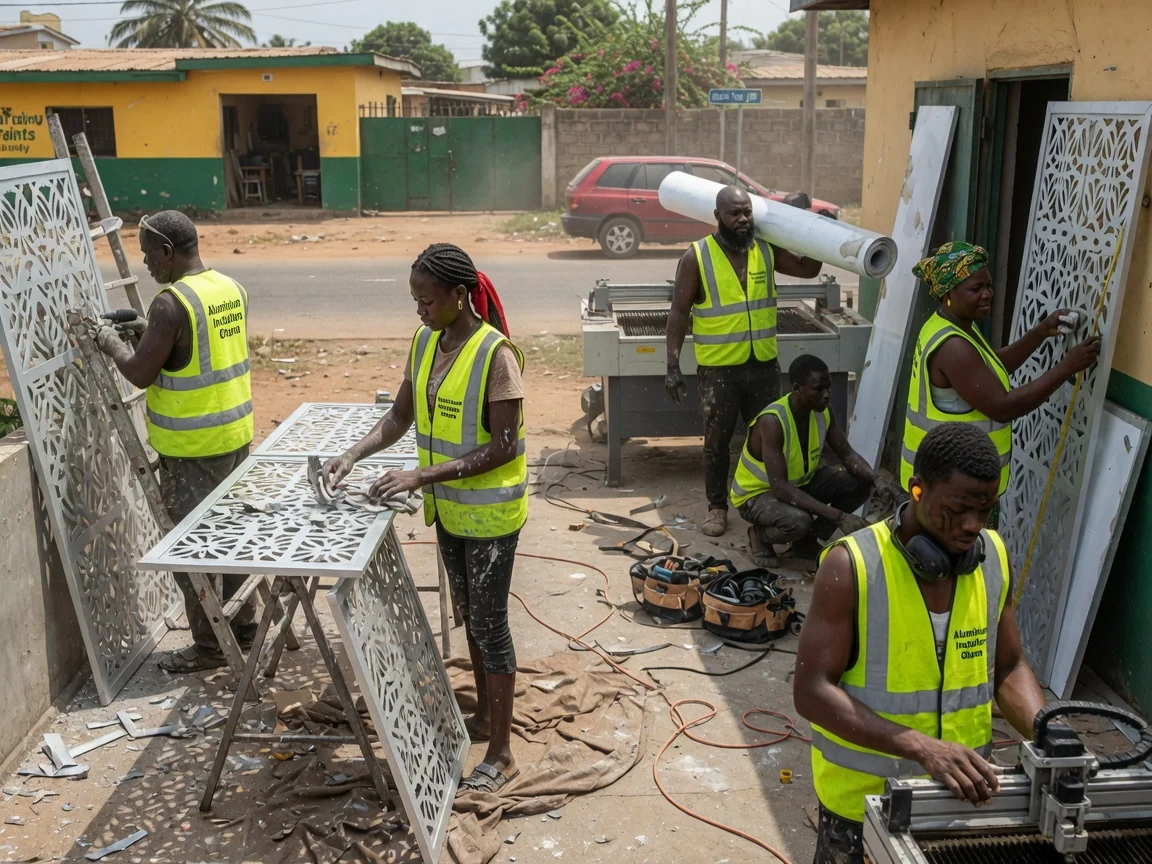
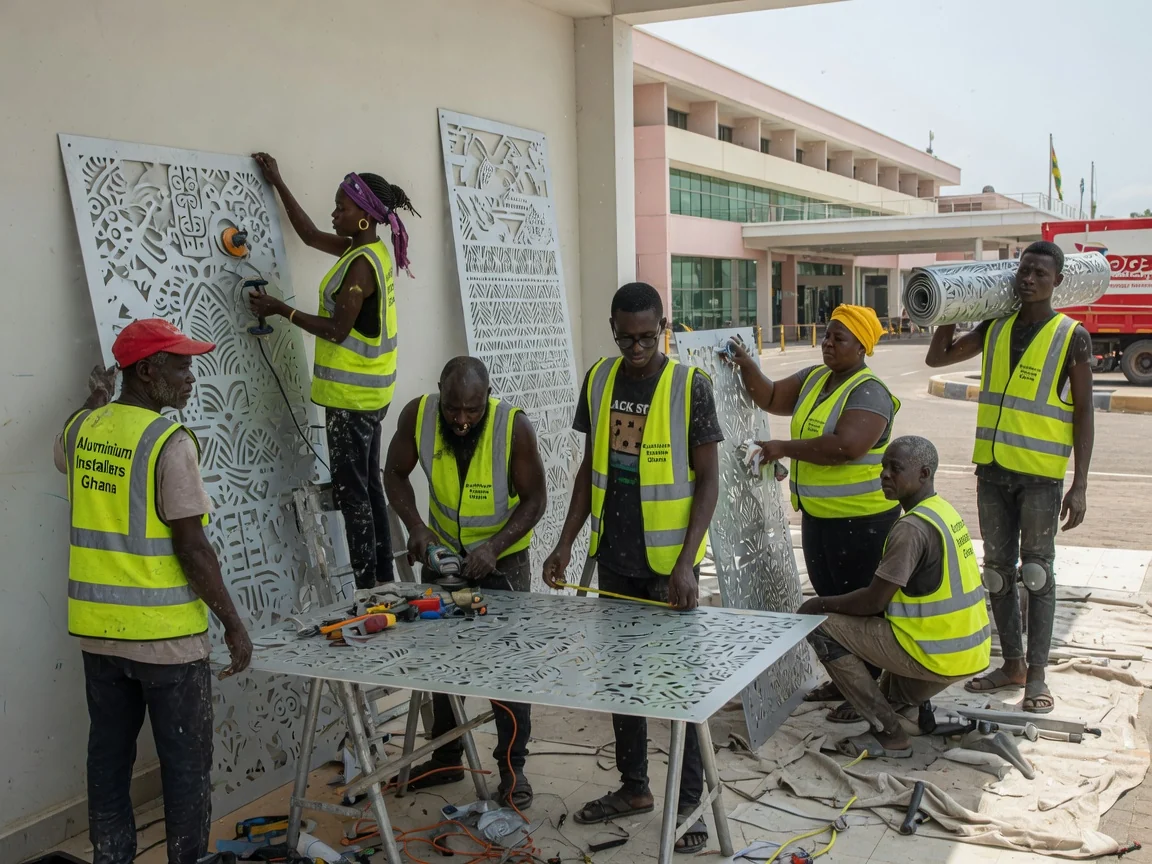
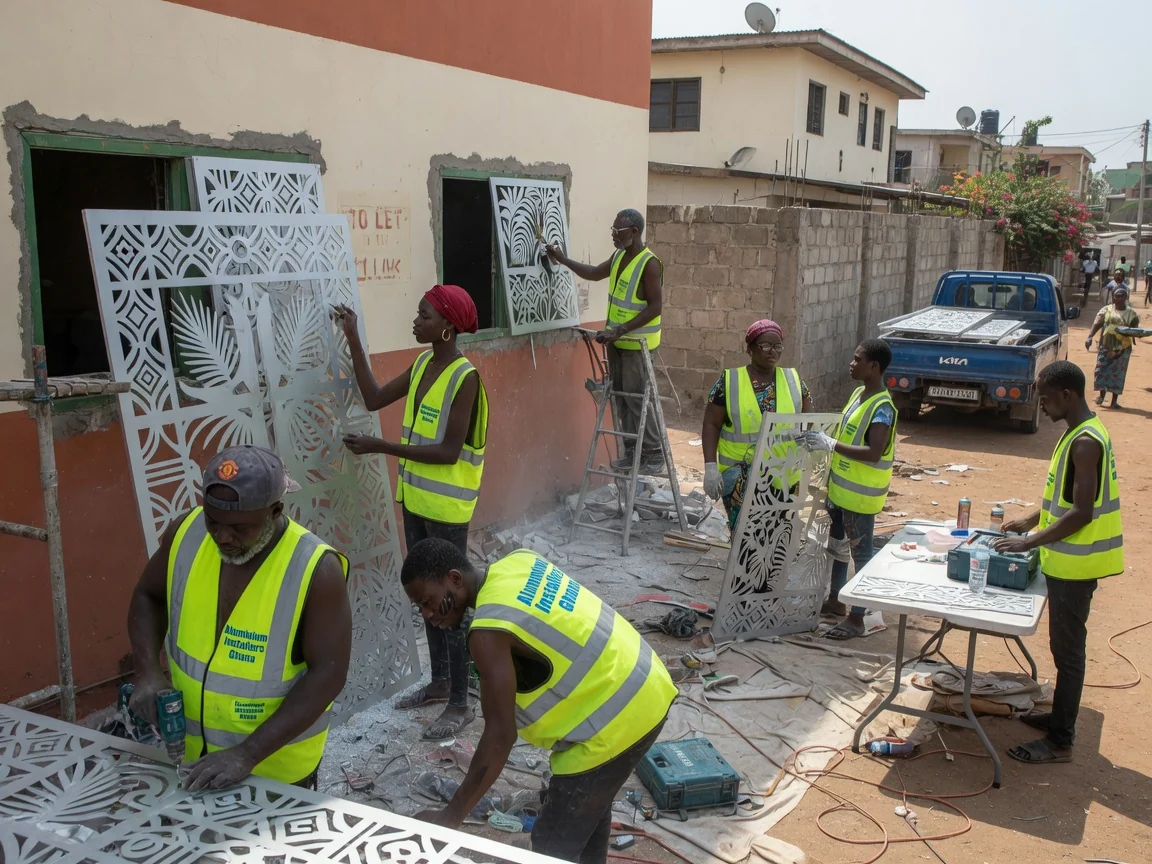
CNC Routing vs Laser Cutting Compared
| Method | Cutting head | Best for | Typical material | Edge / tolerance |
|---|---|---|---|---|
| CNC routing | Spinning tool bit (X/Y/Z) | Solid plate, 3D profiling, signage faces, depth | Thicker solid aluminium / plate | Clean machined edge; depth control |
| Laser cutting | Focused beam (narrow kerf) | Fine perforation, fretwork, mashrabiya, screens | Aluminium sheet | Very fine, tight repeatable tolerance |
(Method is chosen by material thickness and pattern on survey — many jobs use both: routed frames carrying laser-cut infill.)
How We Cut a CNC or Laser Aluminium Screen
- Survey, brief & artwork — site dimensions taken; pattern, logo or geometry agreed against the real opening.
- Draw the cut file & prove the geometry — vector file with open area, bar widths and margins set; a sample tile signed off.
- Cut to tolerance — CNC router for solid/profiled work, laser for fine perforation and fretwork, repeatable across the run.
- Deburr, finish, frame & install — edges deburred, panels anodised or powder-coated, framed and handed over with the finish spec in writing.
Materials & Real Standards
- Aluminium grades — architectural sheet and plate in marine-suitable alloys for Ghana’s coastal humidity; thickness chosen for span and rigidity
- Cutting tolerance — described qualitatively: fine, repeatable kerf on laser for decorative perforation and fretwork; controlled depth on CNC routing for solid and 3D work
- EN 1090 — execution of aluminium structures (-1 conformity, -3 aluminium; Execution Classes EXC1–4) where a screen or sub-frame is load-bearing or wind-loaded
- Finishes — anodising (natural, bronze, champagne, black) and powder coating to RAL/Pantone, applied after cutting to protect cut edges
What Affects the Cost
- Pattern complexity and open area — intricate fretwork and dense perforation take more cutting time
- Sheet thickness, alloy and panel size, and the number of matching panels in the run
- Cutting method (router vs laser) and whether 3D profiling is involved
- Finish specified (anodised vs powder-coated, special colours)
- Framing, sub-frame and installation access
CNC and laser aluminium work is quoted on survey — the pattern, thickness, finish and panel count decide the figure. We never quote “cheap,” and we never substitute a thinner sheet or a coarser pattern without telling you.
Applications Across Ghana
- Solar-shading screens and brise-soleil on corporate and hospitality façades (Airport City, Ridge)
- Privacy screens, mashrabiya and feature walls for residences and hotels (East Legon, Cantonments)
- Perforated balustrade infill, gates and entrance features
- Architectural signage faces and logos cut into solid aluminium
- Ceiling and soffit feature panels, and re-clad screen elements on existing buildings in Kumasi and Takoradi
Areas We Serve
Aluminium Installers Ghana fabricates and installs CNC and laser-cut aluminium across Greater Accra — Airport City, Ridge, Cantonments, the CBD, Osu, East Legon, and Tema — plus Kumasi and Takoradi.
Related Services
- Specialty Aluminium Fabrication — bespoke architectural metalwork
- Aluminium Window Systems — windows and door systems
- Louvres & Brise-Soleil — fixed and operable solar shading
- Facade Engineering — engineered building envelopes
- Aluminium Windows Cost (Ghana) — pricing guide
Frequently Asked Questions
What is the difference between CNC-routered and laser-cut aluminium? A CNC router uses a spinning tool bit and suits thicker solid aluminium, deeper profiling and 3D shaping; a laser cuts with a focused beam and excels at fine perforation, intricate fretwork and very clean edges in sheet. We choose the method by material thickness and pattern.
Can you cut a custom pattern, logo or mashrabiya from my own artwork? Yes — we turn vector artwork, a logo or a reference into a manufacturable cut file, setting open area, bar widths and edge margins so the panel is strong as well as beautiful. Geometric, calligraphic and perforated-gradient patterns are routine.
How accurate is the cut and how repeatable across many panels? Decorative perforation and fretwork is cut to tight, repeatable tolerances — typically a fraction of a millimetre on a laser — so a screen wall lines up hole-to-hole. We prove a sample tile, then cut the run from the same file. Exact tolerance is confirmed on survey.
What finishes are available on CNC and laser-cut aluminium? Panels are deburred, then anodised (natural, bronze, champagne, black) or powder-coated to a RAL/Pantone colour. Anodising suits a durable metallic look; powder coating gives the widest colour range. The finish is applied after cutting to protect the edges.