Premium Aluminum Window Systems
Aluminium window and door systems for Ghana — casement, sliding, tilt-turn, thermal-break and double-glazed frames specified, fabricated and installed to real air, water and wind performance (ASTM E283 / E331 / E330), executed to EN 1090-3. Residential and commercial. Aluminium Installers Ghana, since 1988.
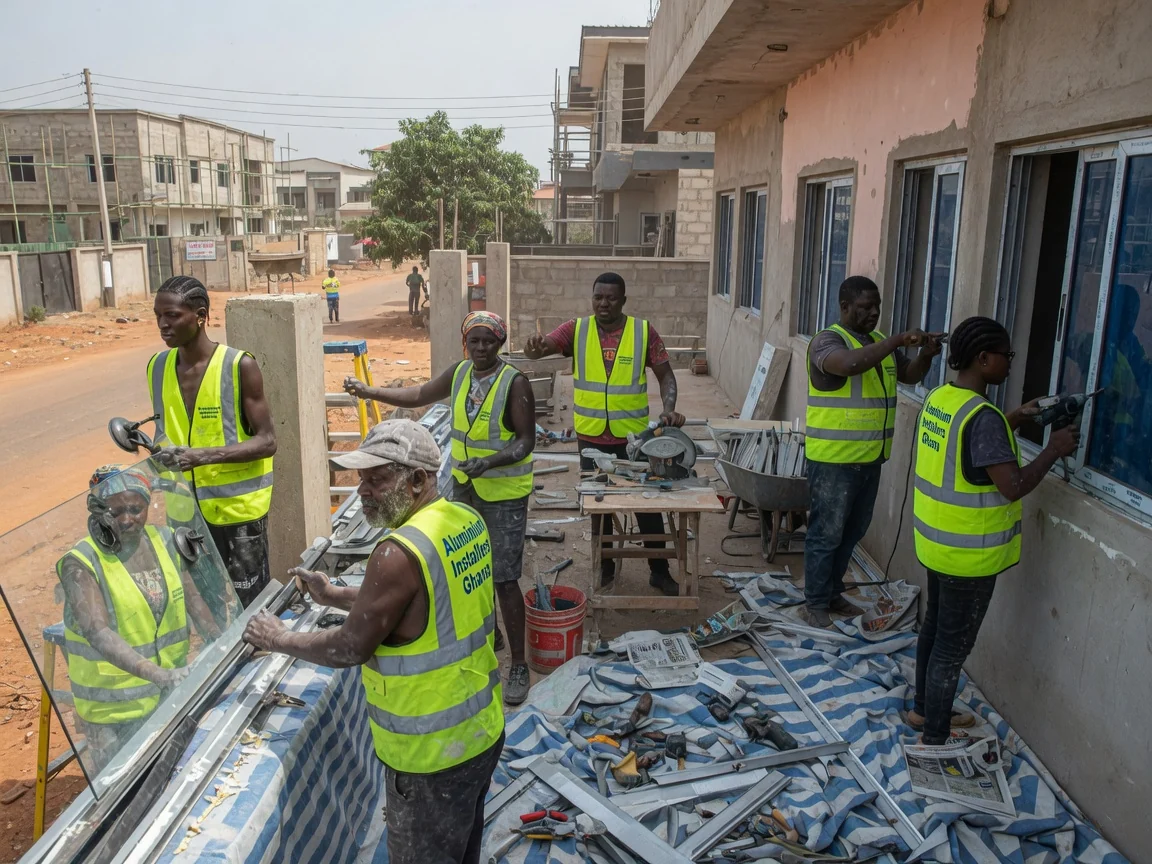
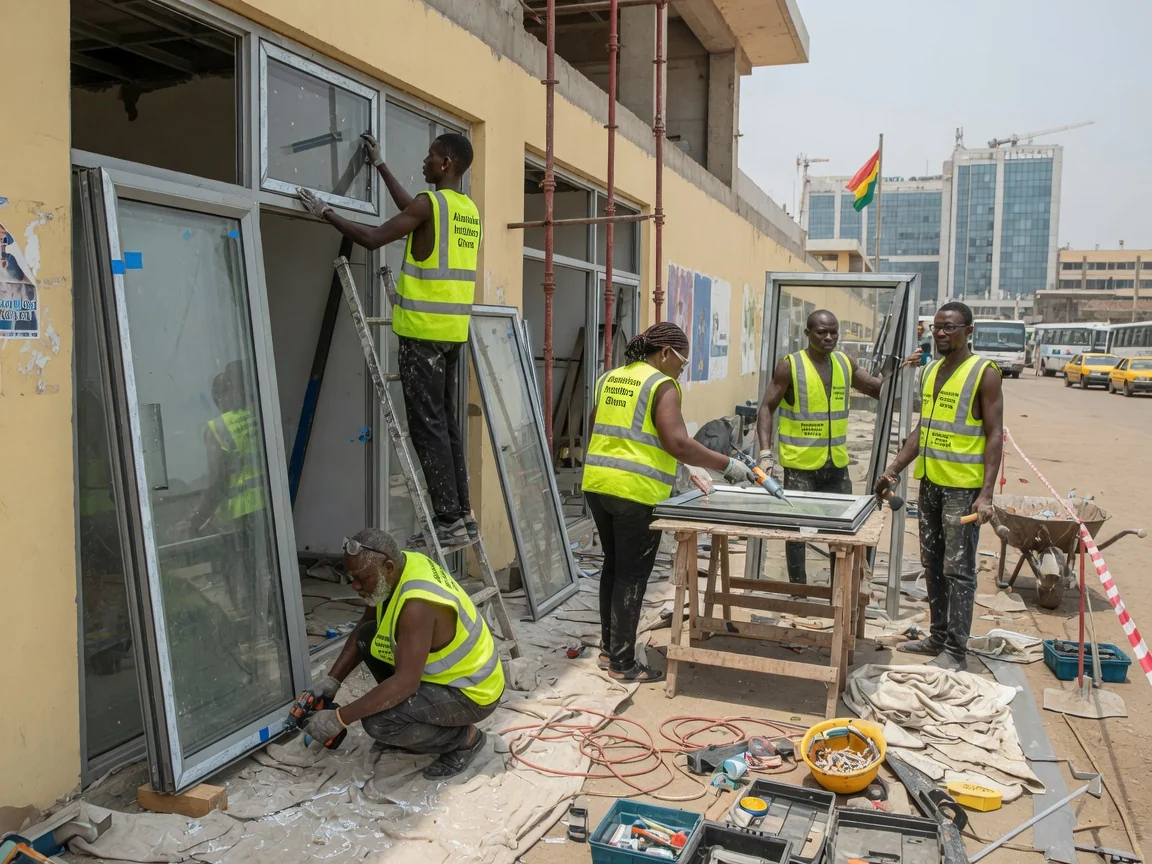
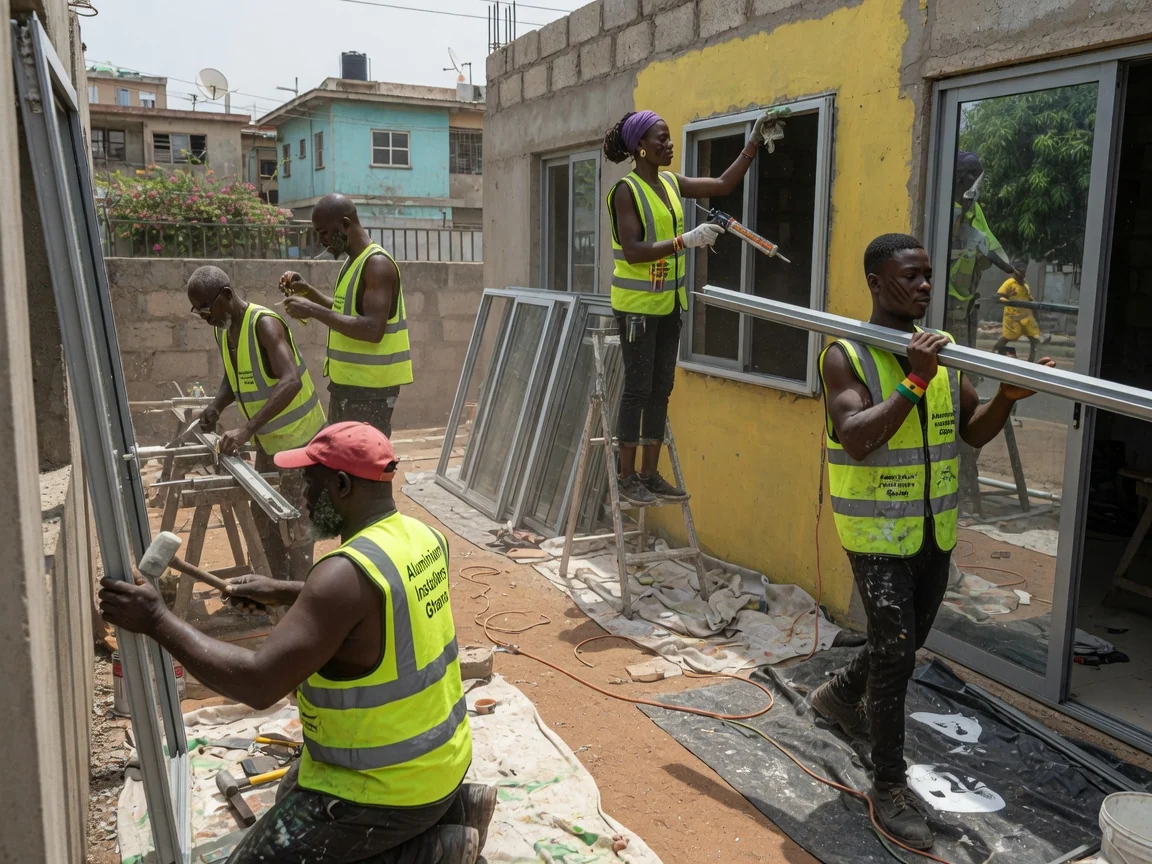
An aluminium window system is the whole assembly — the frame, the glass, the gaskets, the hardware and the way it is anchored and sealed into the opening — not just an aluminium profile. The Ghana market often sells a frame on price alone; a window that keeps wind and driving rain out of an Accra elevation is specified to a performance requirement and installed to seal. Aluminium Installers Ghana has fabricated and installed aluminium windows and doors across Ghana since 1988, and our position is simple: we specify the system to what the opening has to do, and we hand it over in writing.
Why the System — Not Just the Frame — Decides Performance
Two windows can use the same aluminium profile and perform completely differently, because the glass, the gaskets, the drainage and above all the install decide whether wind and water stop at the frame. A frame fitted out of plumb, under-anchored, or sealed badly will leak in the first hard storm no matter how good the profile is. Specifying a window is a performance decision — wind exposure, driving-rain water-tightness, thermal comfort, security and acoustics — and it should be made against the elevation, not against the price of the cheapest unit.
Choosing an Aluminium Window System
The right system follows the building. A coastal or high-rise elevation in Takoradi or an Airport City tower needs a frame and glass rated for higher wind load and water pressure; an air-conditioned commercial or hospitality interior benefits from a thermal break and double glazing; a residential apartment may be served well by a sliding system. We read the elevation first, then specify the frame type, the glazing and the performance class to suit it.
Window & Door Systems We Fabricate and Install
Casement Windows
Side-hinged frames that open outward and compress against the seal, giving strong resistance to wind-driven rain. The default where weather-tightness on an exposed elevation matters most.
Sliding Windows & Doors
Horizontally sliding sashes on tracks — space-saving, easy to operate, and well suited to apartments, shopfronts and balconies. Available as two-track, three-track and large sliding-door (patio) configurations.
Tilt-Turn Windows
A single handle gives two actions: tilt-in at the top for secure background ventilation, or full inward swing for cleaning and egress. The premium choice for commercial, hospitality and high-end residential work.
Thermal-Break Framing
Frames with a polyamide thermal barrier between the inner and outer aluminium, cutting heat transfer and condensation. Specified on air-conditioned commercial, healthcare and hospitality buildings where energy and comfort are priorities. Described qualitatively here — the right barrier and glazing are specified to the building.
Double-Glazed (IGU) & Performance Glazing
Insulated glass units — two panes with a spacer and sealed cavity — for thermal and acoustic performance, with laminated or toughened glass where safety or security requires it. Glazing is selected alongside the frame, not as an afterthought.
Aluminium Doors
Hinged, sliding and folding aluminium doors matched to the window suite — entrance, balcony, patio and commercial shopfront doors fabricated and installed to the same performance discipline.
The Window Systems Compared
| System | Opening action | Best for | Weather-tightness | Notes |
|---|---|---|---|---|
| Casement | Outward, side-hinged | Exposed/high-wind elevations | Strong (compresses on seal) | Best driving-rain resistance |
| Sliding | Horizontal on tracks | Apartments, shopfronts, balconies | Good | Space-saving, easy to operate |
| Tilt-turn | Tilt-in + full swing | Commercial, hospitality, premium | Strong | Two actions, one handle |
| Thermal-break | Per frame type | Air-conditioned buildings | Per frame type | Cuts heat gain + condensation |
(System choice is matched to the elevation, the use and the performance class required, which we confirm on survey.)
How We Deliver an Aluminium Window System
- Survey & read the performance requirement — opening size, wind exposure, water-tightness, thermal/acoustic needs.
- Specify the system and the glass — frame type, alloy, thermal break, glazing, and the air/water/wind class written into the spec.
- Fabricate to tolerance — profiles cut, machined and assembled square with correct gaskets and drainage.
- Install plumb, anchor and seal — frames set plumb, mechanically anchored, perimeter weatherproofed.
- Test, adjust & hand over — operation and seals checked, hardware adjusted, workmanship warranty handed over.
Materials & Real Standards
- EN 1090 — execution of aluminium structures (EN 1090-3 covers aluminium); the installed work is executed to the relevant Execution Class so the fabrication and fixing are to a real engineering standard
- ASTM E283 — air leakage (infiltration) test for windows and doors
- ASTM E331 — water penetration under static air-pressure difference
- ASTM E330 — structural performance under wind (positive and negative) load
- Thermal-break framing — polyamide barrier between inner and outer aluminium, specified qualitatively to the building’s cooling and condensation requirement
- Glazing — single, double-glazed (IGU), laminated and toughened glass selected for thermal, acoustic and safety performance
- Workmanship warranty — Aluminium Installers Ghana’s own decade-long commercial guarantee on the installation (the brand’s workmanship warranty, not a material standard)
What Affects the Cost
- The frame system (casement, sliding, tilt-turn) and whether a thermal break is required
- The glazing — single vs double-glazed/IGU, and laminated or toughened glass for safety
- Opening size and quantity, and the wind/water performance class the elevation needs
- Anchoring, perimeter sealing and access (ground-floor vs high-rise elevation)
- Finish — mill, anodised or powder-coated (RAL colour)
Indicative aluminium window units have been listed from around GH₵100 on the Ghana classifieds market as a basic entry point, but that is a bare unit, not a specified installed window. Fabricated and installed residential and commercial work is quoted on survey — the glass, the performance class, the size and the access decide the figure. We never quote “cheap”; we quote what the opening honestly needs.
Applications Across Ghana
- Residential apartments and homes in East Legon, Cantonments and Spintex
- Air-conditioned commercial offices and corporate fit-outs in Airport City, Ridge and the CBD requiring thermal-break framing
- Hotels and hospitality buildings specifying tilt-turn and acoustic glazing
- Coastal and high-rise elevations in Takoradi and Tema needing higher wind/water performance
- Shopfronts, retail and commercial sliding-door entrances
- Residential and commercial projects in Kumasi and Takoradi
Areas We Serve
Aluminium Installers Ghana fabricates and installs aluminium window and door systems across Greater Accra — Airport City, Ridge, Cantonments, the CBD, Osu, East Legon, and Tema — plus Kumasi and Takoradi.
Related Services
- Curtain-Wall Installation — stick and unitised façade install
- Structural Glazing — bonded and captured glazed façades
- CNC & Laser Aluminium — precision-cut frames and components
- Louvres & Brise-Soleil — ventilation and solar-shading
- Decade Warranty Aluminium — our workmanship guarantee
- Aluminium Windows Cost Guide — material vs installed
Frequently Asked Questions
What does an aluminium window cost in Ghana? Loose units have been listed from around GH₵100 as an indicative entry point, but that is a basic unit only. A specified, fabricated and installed window is quoted on survey, because the opening size, glass, wind exposure and access decide the figure. We give an honest on-survey price rather than a number that would not hold.
What is a thermal-break window and do I need one in Ghana? A thermal-break frame has a polyamide barrier between the inner and outer aluminium, cutting heat transfer and condensation. It matters most on air-conditioned commercial and hospitality buildings; a simple unconditioned room is often fine with a standard frame. We specify the frame to the building.
What is the difference between casement, sliding and tilt-turn windows? A casement opens outward and seals tightly against wind and rain; a sliding window runs on tracks and saves space; a tilt-turn opens two ways from one handle for ventilation or cleaning. We match the type to the room, the exposure and the use.
How do you know the windows will not leak in a storm? Window performance is measured to ASTM E283 (air), ASTM E331 (water) and ASTM E330 (wind load). We specify to the performance class the elevation needs, install plumb and properly anchored, and seal the perimeter — because most leaks come from a bad install, not a good window.