Aluminium Louvres & Brise-Soleil
Aluminium louvres and brise-soleil for Ghana's tropical sun — fixed and adjustable blade louvres, solar-shading fins, ventilation louvres and plant-screening that cut solar heat gain while keeping buildings ventilated. Designed and installed to EN 1090 by Aluminium Installers Ghana, since 1988.
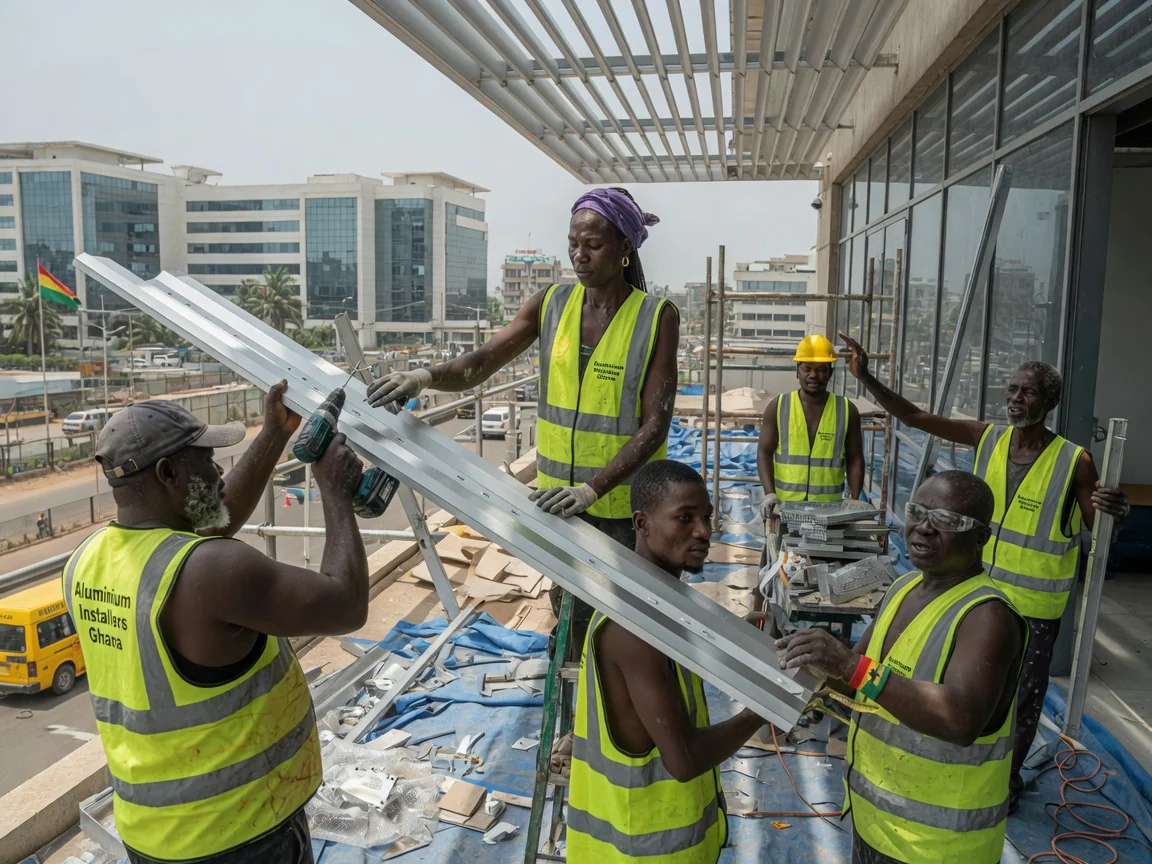
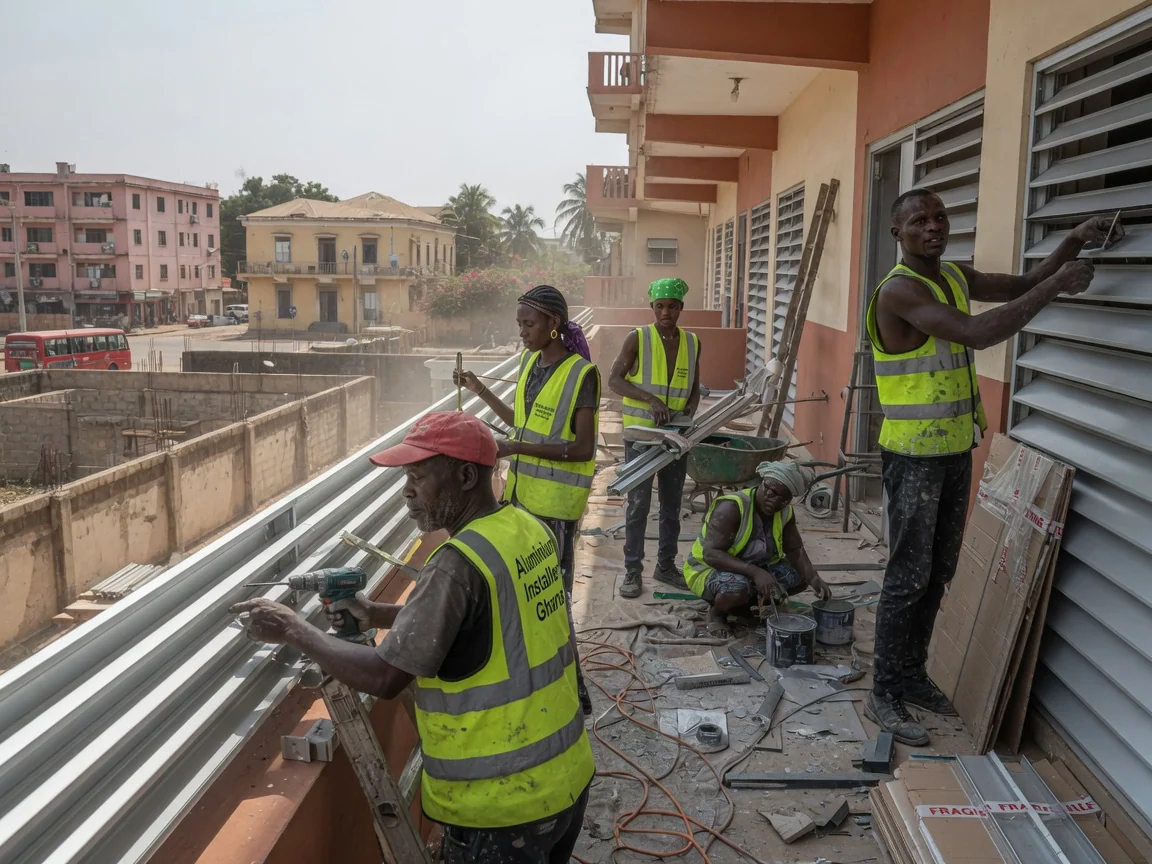
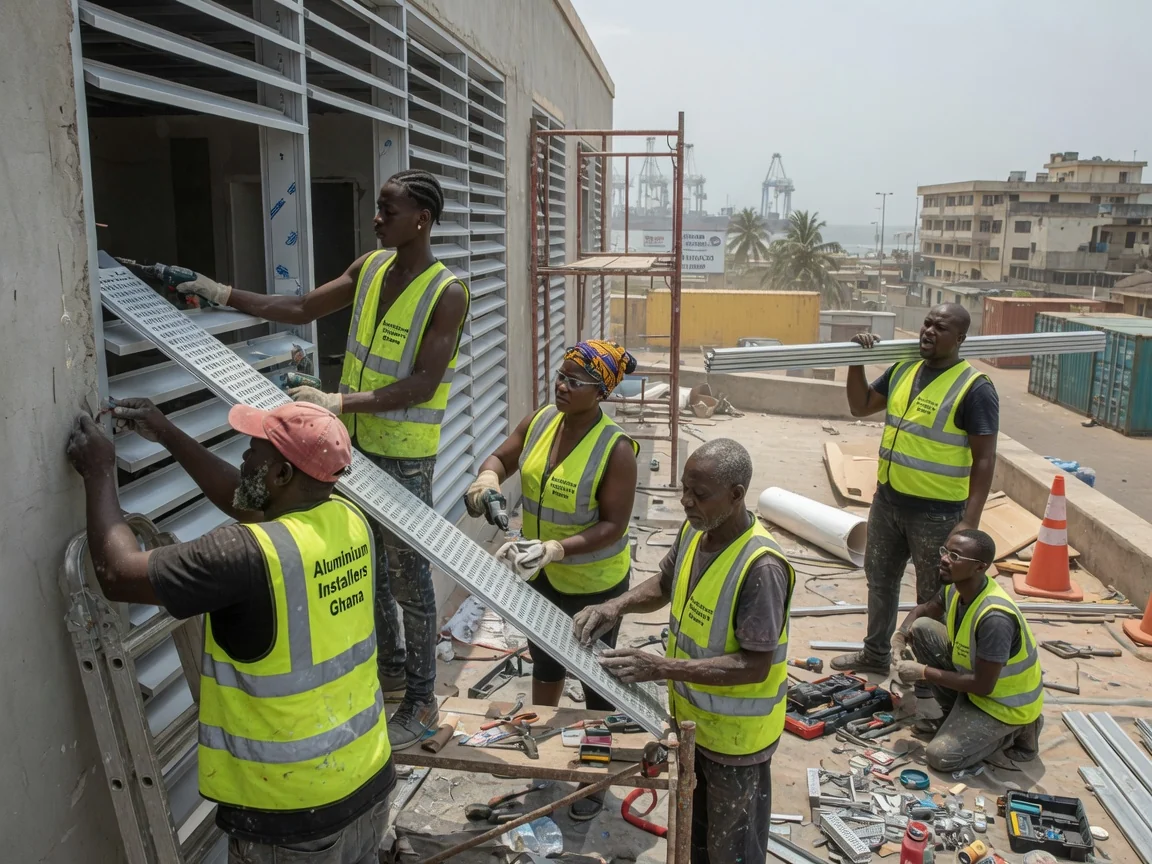
A brise-soleil is an external array of aluminium blades fixed across a facade to break the sun before it reaches the glass; a louvre is the same angled-blade principle used to shade, ventilate, screen plant, or shed rain. In Ghana’s tropical sun, both do real work — they cut solar heat gain and glare while keeping the building ventilated. Aluminium Installers Ghana has designed, fabricated and installed aluminium louvre and brise-soleil systems across Ghana since 1988, and we engineer each one to the elevation it protects.
Why Louvres & Brise-Soleil Matter in the Tropics
A glass facade in Accra takes direct sun for much of the day, and unshaded glazing turns that sun straight into heat inside the building — driving up the cooling load and the glare. A brise-soleil sits in front of the glass and intercepts the sun before it lands on it, so the interior stays cooler without sealing the building off from daylight or air. The blades shade; the gaps between them still let light and ventilation through. Done well, sun-shading is not a decorative add-on — it is a building-performance decision made against the orientation of each elevation.
The Louvre & Brise-Soleil Range
Fixed-Blade Louvres & Brise-Soleil
Aluminium blades set at a fixed angle, sized and pitched to the sun path on the elevation they face. Robust, maintenance-light, and the usual choice for a permanent shading screen or architectural fin array.
Adjustable (Operable) Blade Louvres
Blades whose angle can change — manually or by actuator — so shading and airflow are tuned through the day or season. Specified where light and ventilation need to vary on an elevation.
Ventilation & Weather Louvres
Angled blades that let air pass while shedding driven rain — used to keep plant rooms, service risers and car-park decks ventilated while screening them and keeping the weather out.
Plant & Equipment Screening
Louvre screens that hide rooftop and ground-level plant, condensers and refuse stores behind a clean aluminium elevation while still letting the equipment breathe.
Architectural Fins
Vertical or horizontal aluminium fins used as a facade expression that also shades — combining sun control with the look of the building.
Louvre Types Compared
| Type | What it does | Blade | Specify for |
|---|---|---|---|
| Fixed brise-soleil | Permanent solar shading | Fixed-angle | Shading screens, architectural fins |
| Adjustable louvre | Tunable shade + airflow | Operable | Elevations needing variable light/air |
| Ventilation/weather louvre | Air through, rain out | Fixed-angle | Plant rooms, risers, car-park decks |
| Plant-screening louvre | Hides + ventilates plant | Fixed-angle | Rooftop/ground plant, condensers |
(The blade depth, angle and pitch are designed to the orientation and job of each elevation — the table is the type, not the geometry, which is set on the building.)
Standards & Engineering
- EN 1090 — execution of aluminium structures (-1 conformity/CE marking, -3 aluminium; Execution Classes EXC1–4). A louvre or brise-soleil screen carries wind load on the building’s elevation, so it is engineered and fabricated as a structural assembly to this standard — not detailed as a loose finish.
- Solar shading — described qualitatively: blades sized, angled and pitched to the sun path on the elevation to intercept direct sun and reduce solar heat gain and glare, while keeping daylight and air moving.
- Ventilation — the angled-blade geometry passes air while shedding driven rain, the basis of every weather and ventilation louvre.
- Finish — powder-coat (RAL) or anodised, specified for colour retention and durability through Accra’s sun and humidity, and documented at handover.
What Affects the Cost
- The job (shading brise-soleil vs ventilation louvre vs plant screen) and the blade type (fixed vs adjustable)
- Blade depth, pitch and the area of the elevation to be screened
- Adjustable/actuated blades vs fixed — operable systems cost more
- The supporting frame, mullions and fixings, and the building height and access
- Finish — powder-coat (RAL) or anodised
A louvre or brise-soleil screen is quoted on survey — the elevation, orientation, blade type and access decide the figure. Indicative aluminium-system references and the full cost picture are on the Aluminium Windows & Doors Cost Guide.
Applications Across Ghana
- Solar-shading brise-soleil on corporate and bank facades in Airport City, Ridge and the CBD
- Ventilation louvres for plant rooms, service risers and car-park decks across Greater Accra
- Plant and condenser screening on rooftops and ground-level service yards
- Architectural fin arrays on hotels, malls and institutional buildings
- Commercial and institutional projects in Kumasi and Takoradi
Areas We Serve
Aluminium Installers Ghana designs and installs aluminium louvres and brise-soleil across Greater Accra — Airport City, Ridge, Cantonments, the CBD, Tema, East Legon, and Spintex — plus Kumasi and Takoradi.
Related Services
- Aluminium Windows & Doors Cost Guide — GH₵/CFA, material vs installed
- Aluminium Window Systems — casement, sliding, tilt-and-turn
- Curtain Wall Installation — stick and unitised facades
- Façade Engineering — the whole envelope, performance-tested
- CNC & Laser Aluminium — precision blade and fin fabrication
Frequently Asked Questions
What is a brise-soleil and what does it do? A brise-soleil (“sun-breaker”) is an external array of aluminium blades fixed across a facade to block direct sun before it reaches the glass. In Ghana’s tropical sun it reduces solar heat gain and glare, keeping interiors cooler and easing the cooling load — while the open blades still let daylight and air through. We size and angle the blades to the orientation of the elevation.
What is the difference between fixed and adjustable louvres? Fixed-blade louvres are set at one angle pitched to the sun path — robust and maintenance-light. Adjustable (operable) louvres let the blade angle change, manually or by actuator, so shading and airflow can be tuned. We specify whichever fits the building’s use and detail both to carry wind load.
Can aluminium louvres ventilate as well as shade? Yes — the angled blades let air pass while breaking the sun and shedding rain. A ventilation louvre keeps plant rooms, car-park decks and risers airing through while screening them. We choose the blade depth and pitch to whichever job the elevation needs.
Are aluminium louvres suitable for Ghana’s climate? Aluminium does not rust and carries a durable factory finish (powder-coat or anodised) that holds colour through sun and humidity, and a louvre or brise-soleil actively cuts solar heat gain while keeping the building ventilated. We fabricate and install to EN 1090 so the assembly carries wind load, and hand over the finish specification in writing.